The Listings Liberation Manifesto
Rental listings must be properly represented in the AI age.
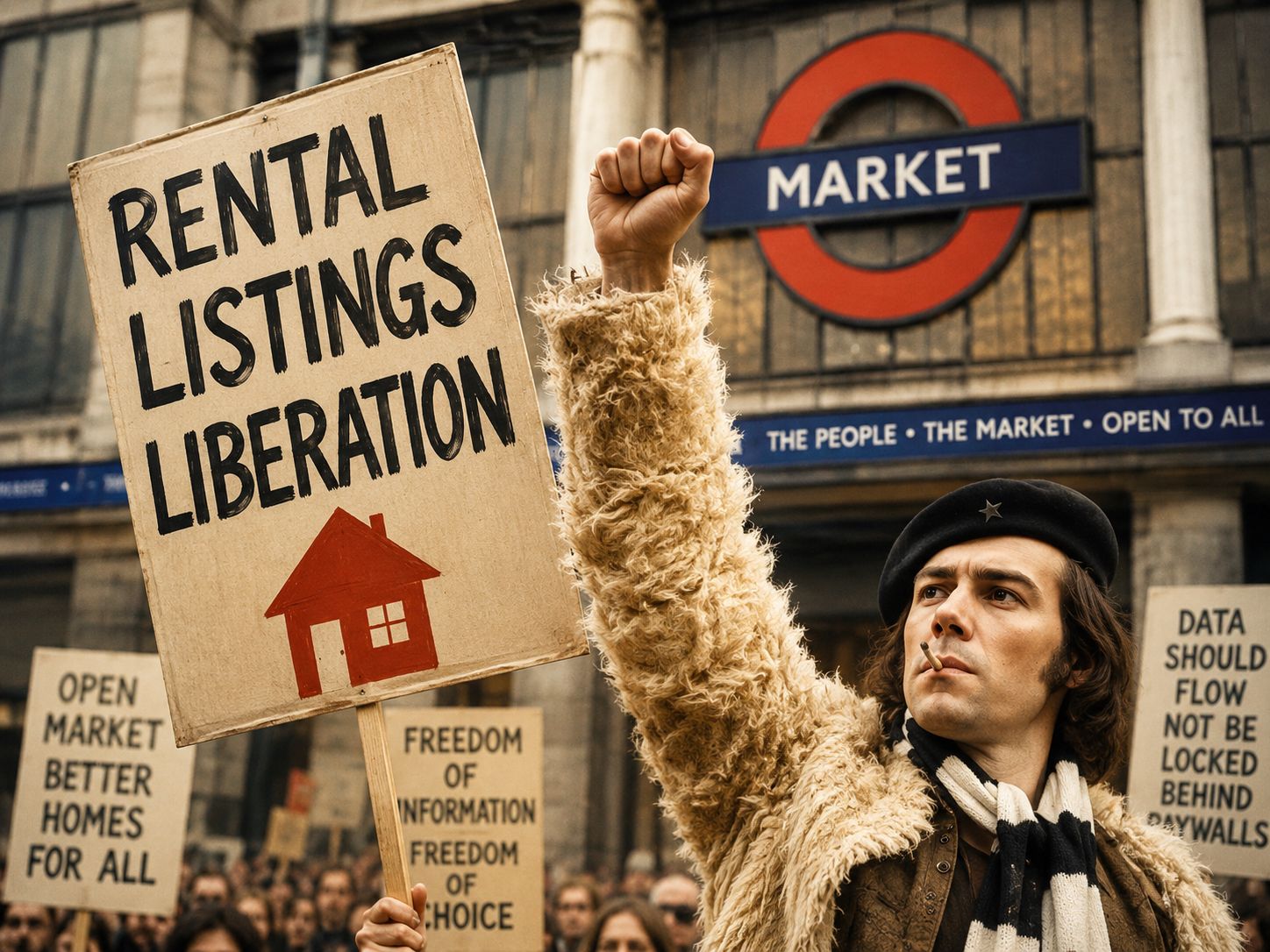
A rental provider told us recently that something curious was happening. Fewer renters were finding their homes by searching Rightmove or another property portal. Some had asked ChatGPT or Claude where they should live and which buildings might suit them.
It may sound like a small change in how a conversation begins, but it points to a much larger change in how people will find homes.
The short version
Renters are starting to ask AI where to live, not just search portals. If a listing isn’t written so AI can read it accurately, it gets misrepresented or missed. Listings Liberation is our call for rental providers, portals and AI companies to make listing data open, accurate and provider-controlled, in a form AI can trust.
Join the conversationFrom searching to asking
A property portal presents a collection of listings and gives the renter tools to search them. The renter chooses a location, sets a budget, applies some filters and works through the results.
An AI assistant works differently. A renter can describe their needs in their own language and expect the assistant to understand it. Instead of returning a list based on a handful of filters, the AI assistant is expected to provide a useful answer.
“Find me a pet-friendly two-bedroom home near King's Cross, available next month, with a gym and somewhere to work from home.”
That creates an obvious problem. The answer can only be as good as the information available to the AI assistant.
A listing can be online and still be invisible
Many rental listings were created for websites and property portals, not for AI assistants to read, understand and compare. Although the information may technically be online, that does not mean an AI assistant can use it reliably.
The price may be out of date, the pet policy may be buried in a paragraph and important amenities may appear only in photographs. Availability might sit behind a search form that an AI assistant cannot access, while several older versions of the same listing remain elsewhere on the internet.
AI is clever, but it is not clairvoyant. When the underlying information is incomplete or unclear, it may misunderstand the listing, retrieve an older version or miss the home entirely.
The renter then receives an unreliable answer. The rental provider’s home is either absent from the recommendation or represented incorrectly. Neither outcome is particularly helpful.
AI assistants are only the beginning
Today, renters are asking AI assistants questions. The next development is the AI agent, which can do more than provide an answer.
With a renter’s permission, an AI agent could search the market, compare homes, ask rental providers questions, arrange viewings and help with the process of securing a home. The distinction matters: an AI assistant answers, while an AI agent can act.
For either system to work properly, it needs accurate information about the homes that are genuinely available. Rental listings therefore need to be prepared both for the AI assistants people use today and the AI agents that may represent them tomorrow.
What we mean by Listings Liberation
It means making provider-approved listing information available in a form that AI systems can understand and use accurately.
That does not mean giving away ownership of property data or allowing anyone to use it without permission. It does not mean removing listings from property portals, abandoning existing technology or weakening the rental provider’s relationship with the renter.
A properly represented listing should tell an AI system what the home is, where it is, what it costs, whether it is still available and how current that information is. It should explain the amenities, policies and terms that determine whether the home is suitable for a particular renter. It should also identify the rental provider as the authoritative source and give the renter a clear route to enquire.
The rental provider should remain in control of the information. Its brand should remain visible, its listing should remain attributable and any changes to price or availability should come from a source it has approved.
This is accurate information moving safely between the organisations providing homes and the AI systems helping renters find them. Better information converts better, and a rental industry that gets this right is a healthier one for everyone in it.
An invitation to property portals
Property portals transformed the rental market. They brought listings together, gave renters a practical way to search and became an important source of demand for rental providers.
The arrival of AI does not erase that contribution. It simply creates another route into the same market. Some renters will continue to begin with a portal, some will begin with an AI assistant and many will use both.
We are inviting portals to help shape what comes next, not calling for them to be bypassed.
Property portals hold valuable, structured information about the rental market. By finding responsible ways to make current listings available to AI systems, with clear attribution and appropriate commercial arrangements, they can remain central to how renters discover homes.
The alternative is to leave AI assistants to reconstruct the market from cached pages, incomplete websites and old search results. That would be bad for portals, bad for rental providers and particularly bad for the renter trying to work out where to live.
Rentiful’s commitment
Rentiful is building the trusted AI agent for renters. To represent renters properly, we need accurate information about the homes available to them, so we are investing in making rental listings understandable to AI systems.
Our approach is straightforward. Listing information should remain controlled by its source, stay connected to current pricing and availability and retain clear attribution to the rental provider. It should use open standards wherever practical, which is why we are driving Residential Open Data alongside AI Connect: the industry should not end up replacing one closed marketplace with another.
AI Connect is one way we are putting those principles into practice. It helps rental providers publish information that AI assistants and AI agents can understand while retaining their existing property systems, websites and portal relationships.
Listings Liberation, however, is not a sales campaign for AI Connect. It is a call for the rental industry to recognise a change that has already begun, and to build the standard for it together: better represented listings mean faster matches, higher conversion and renters who stay because the home was right the first time.
If you would like to work with us on Listings Liberation or the underlying Residential Open Data specification, please get in touch.
A call to the rental industry
Rental providers should ask whether their homes are being represented accurately when renters use AI. Property technology companies should make approved listing information portable and understandable. AI companies should use authoritative sources, preserve attribution and admit when information is uncertain.
Property portals should help create trusted routes through which AI systems can access current listings. Rentiful will work with any organisation that shares those aims.
The next generation of renters will not only search for homes. They will ask AI assistants for recommendations and, increasingly, give AI agents permission to act on their behalf.
Our task is to ensure that when they do, every suitable home can be accurately understood, properly represented and found.
Vive la Listings Liberation. ✨